

Shipping Guides
RoRo vs. Container Shipping: Which Is Right for Your Vehicle?
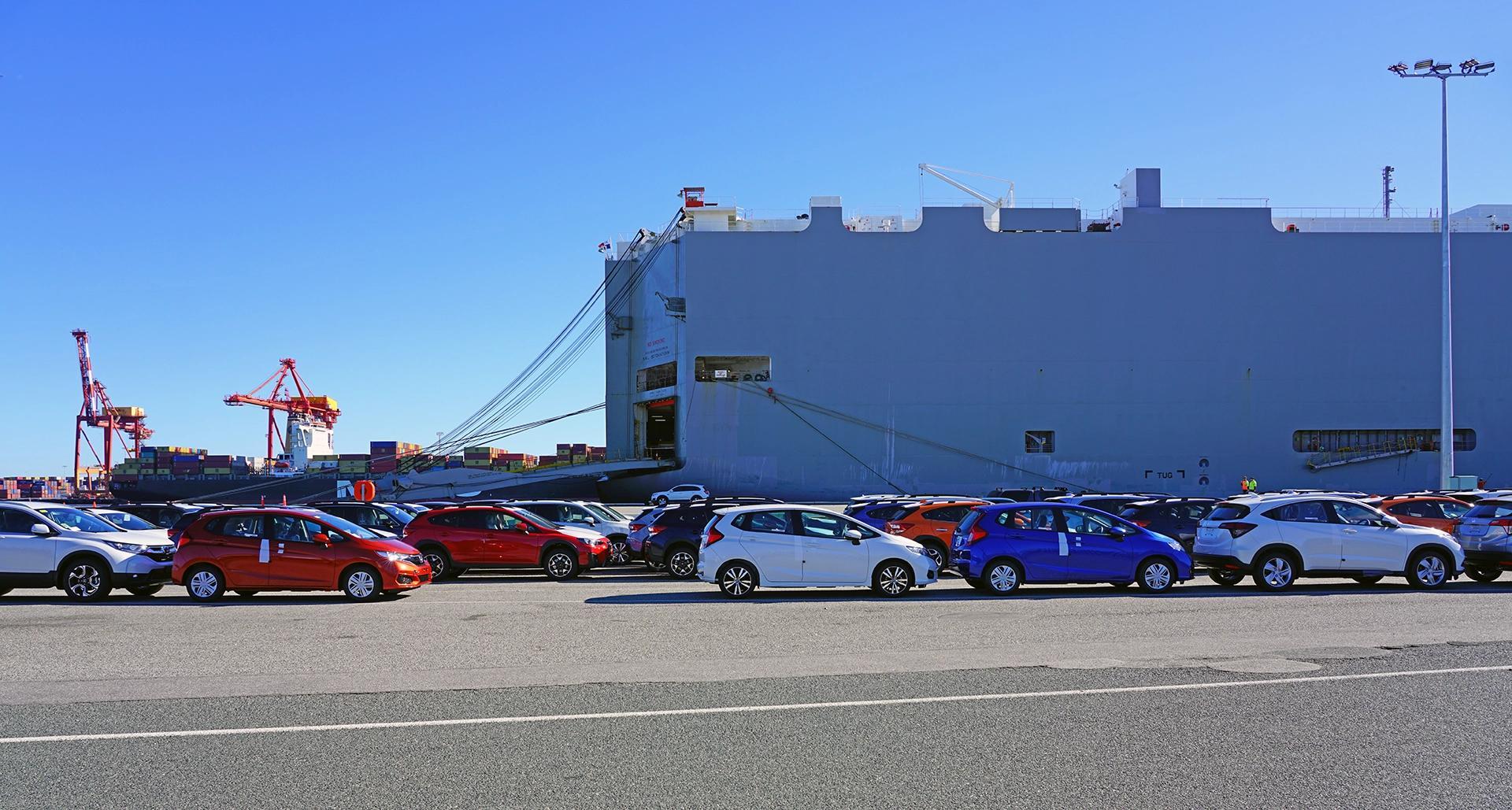
When you ship a vehicle from the United States to West Africa or the Middle East, one decision shapes your cost, your timeline, and how your cargo is handled: RoRo or container? Both are proven, widely used methods, but they suit different vehicles, budgets, and priorities. This guide breaks down the trade-offs so you can decide with confidence.
What is RoRo shipping?
Roll-on/Roll-off (RoRo) shipping moves self-propelled cargo, cars, trucks, buses, and heavy equipment, by driving it directly onto a specialized vessel via a ramp. The vehicle is secured to the deck for the voyage and driven off at the destination port. Nothing is packed into a box; the vehicle itself is the unit of cargo.
Learn more about our RoRo shipping service.
What is container shipping?
Container shipping loads your vehicle into a steel shipping container (typically 20ft or 40ft), which is then sealed and loaded onto a container vessel. The vehicle is chocked and strapped inside, and the container can often hold personal effects alongside the vehicle where regulations allow. A single container can also be shared between multiple vehicles to reduce cost.
Learn more about our container shipping service.
RoRo vs. container: the key differences
1. Cost
RoRo is usually the more economical option for a single running vehicle. Because the vehicle is driven on and off, there is less handling, no container to lease, and less labor involved. Container shipping costs more per vehicle, but that cost can be offset when you consolidate multiple vehicles into one container or ship personal goods along with the vehicle.
2. Security and protection
Container shipping offers greater protection. Once the container is sealed, your vehicle is fully enclosed, shielded from weather and untouched until it reaches its destination. RoRo vehicles are secured on an enclosed deck and handled by trained crews, which is safe and routine, but the vehicle is not sealed away in a private space.
3. Cargo eligibility
RoRo requires the vehicle to be operable, it has to drive on and off under its own power (or be towed by port equipment in some cases). Non-running vehicles, project cars, and salvage units are typically better suited to container shipping, where they can be loaded with a forklift or winch.
4. Oversized and heavy equipment
For high and heavy cargo, dump trucks, excavators, wheel loaders, and agricultural machinery, RoRo is often the natural choice, since these units can be driven or rolled aboard without dismantling. Oversized pieces that exceed container dimensions almost always move via RoRo or flat-rack.
5. Transit time and schedules
Both methods run on regular sailing schedules. RoRo services often have frequent, predictable departures for popular routes, while container availability depends on the trade lane. Check current sailing schedules for your route before booking.
A quick decision guide
- Ship RoRo if: you have a single running vehicle, you want the lowest cost, or you are moving heavy equipment.
- Ship container if: your vehicle is non-running, you want maximum protection, you are shipping personal effects with the vehicle, or you are consolidating several vehicles.
What about customs?
Whichever method you choose, your shipment still needs proper documentation, commercial invoice, packing list, bill of lading, and any required import or export licenses, to clear customs at the destination. Our team handles this for you; see our customs clearance service and our FAQs for the documents commonly required.
Ship with Global Kings Logistics
Whether RoRo or container is right for you, Global Kings Logistics moves vehicles and equipment from the United States to West Africa and the Middle East with real-time VIN tracking and end-to-end support. Not sure which method fits your vehicle and budget?
Request a quote and our team will recommend the best option for your shipment.